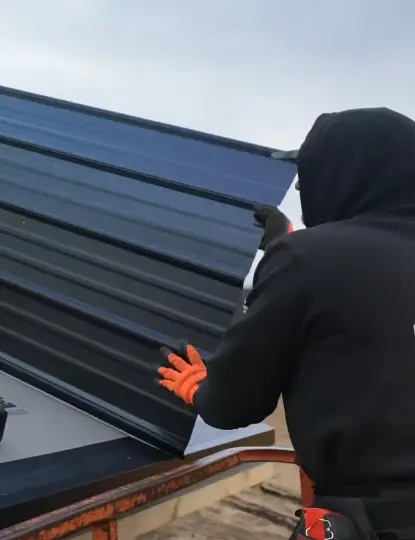

Metal roofing gets marketed heavily on how little maintenance it needs compared to asphalt, and that’s genuinely true. But “less maintenance” doesn’t mean “no maintenance,” and the gap between those two ideas is exactly where a lot of homeowners end up paying more than they expected to, not because metal roofing failed them, but because a small, cheap fix sat unaddressed long enough to become an expensive one.
This guide walks through what skipping maintenance actually costs, in real terms, and why the math almost always favors staying ahead of small issues rather than waiting for them to become obvious.
If your roof is overdue for a check, Pecan Metal Roofs offers routine maintenance inspections for homeowners and businesses across Austin, TX.
Why “Low Maintenance” Gets Misunderstood as “No Maintenance”
Metal roofing genuinely requires far less upkeep than asphalt shingles, no granule loss to monitor, no curling edges, no periodic reshingling. This is a real, accurate selling point. The problem is that “far less” sometimes gets rounded up to “none at all” in a homeowner’s mind, and that’s where the real cost gap opens up.
A metal roof still has failure points, fasteners, sealant, flashing, coating, that degrade gradually over years of thermal cycling and UV exposure. These points don’t announce themselves loudly. A loosening fastener doesn’t make a sound. Sealant doesn’t visibly crack until you’re looking closely. This is exactly why a roof can go years without any obvious sign of trouble, right up until it doesn’t.
The Actual Escalation Path, Small Issue to Big Problem
Here’s how an unaddressed small issue typically progresses, and where the cost jumps at each stage.
Stage one, a single loosening fastener or a small sealant crack. At this stage, the fix is genuinely minor, often 300 to 600 dollars, sometimes less if it’s caught during a routine inspection alongside other small items. This is the cheapest point in the entire progression by a wide margin.
Stage two, water begins entering at that point during rain events. The roof itself may show no visible sign yet, since water can travel along the underlayment or framing before showing up anywhere obvious. This stage can last months without any indication something is wrong.
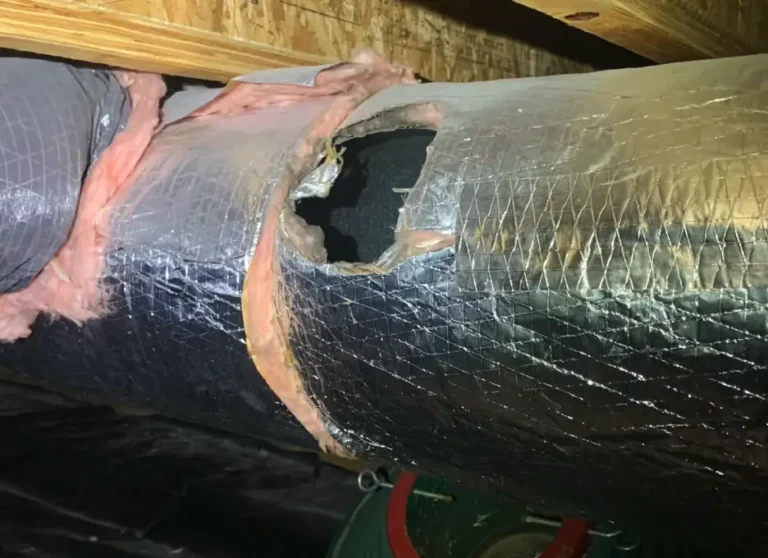
Stage three, moisture reaches the decking or insulation. Wet decking can begin to weaken over time, and wet insulation loses much of its effectiveness while it stays damp. This is typically where the cost starts climbing meaningfully, since addressing it now often means not just fixing the original fastener or sealant issue, but replacing damaged decking sections and affected insulation, work that wasn’t part of the original, much simpler fix.
Stage four, a visible ceiling stain or active drip appears inside the home. By the time water is visible from inside the living space, the problem has typically existed for a meaningful period already. Repair at this stage frequently involves decking replacement, insulation replacement, and sometimes drywall or ceiling repair inside the home, costs that have nothing to do with the roof itself but exist entirely because the original small issue went unaddressed.
Stage five, mold or structural wood damage. In the more serious, longer-neglected cases, sustained moisture exposure can lead to mold growth or genuine structural wood damage in the framing. At this stage, the cost has moved well beyond roofing work entirely, into remediation and structural repair that can run into thousands of dollars beyond what any roofing fix alone would have cost.
The point of walking through these stages isn’t to create alarm. It’s to show clearly why a 300 to 600 dollar fix at stage one is fundamentally different math than the same underlying problem addressed at stage four or five.
Real Numbers, Side by Side
To put this in concrete terms, here’s a simplified comparison of the same underlying issue, a failed sealant joint at a roof penetration, addressed at different stages.
| Stage Addressed | Approximate Cost |
|---|---|
| Caught during routine inspection, stage one | 300 to 600 dollars |
| Addressed after a minor leak is noticed, stage three or four | 1,500 to 4,000 dollars, including decking and insulation work |
| Addressed after significant interior damage, stage five | 5,000 to 15,000 dollars or more, including remediation and interior repair |
This isn’t a worst case scenario built to scare anyone into a maintenance contract. It’s a straightforward reflection of how water damage compounds over time, the longer moisture has access to wood framing and insulation, the more those materials are affected, and the more extensive the eventual repair becomes.
Why Metal Roof Maintenance Specifically Catches These Early
A routine metal roof maintenance visit specifically checks the failure points that lead to this exact escalation path, fastener tightness, sealant condition at every penetration, flashing integrity, and coating condition, along with a general check for anything unusual. This is fundamentally different from a homeowner glancing at their roof from the driveway, since most of what actually causes leaks isn’t visible from ground level at all.
Catching a loosening fastener or a cracking sealant joint during a routine check means the fix happens at stage one, before water has ever had a chance to enter the structure, which is exactly why the twice-yearly inspection standard exists, not as an upsell, but because it genuinely catches problems at their cheapest, easiest point to address.
What Maintenance Actually Prevents Beyond the Roof Itself
The cost of skipped maintenance isn’t limited to roofing repair costs. Once water reaches the interior of a home, several other costs frequently follow.
Insulation replacement. Wet insulation loses effectiveness and often needs replacement rather than simply drying out, which affects both the immediate repair cost and the home’s energy efficiency until it’s addressed.
Drywall and interior finish repair. Ceiling stains, and in more serious cases, actual drywall damage, require interior repair work entirely separate from the roofing fix itself.
Mold remediation. In cases where moisture sits unaddressed long enough, mold remediation is a specialized, often costly service that has nothing to do with roofing contractors and everything to do with how long the underlying leak went unnoticed.
Furniture, flooring, or belongings damage. In more severe cases, water damage can affect items inside the home directly, adding a layer of cost and disruption well beyond the original roofing issue.
None of these costs would exist if the original small issue had been caught during a routine inspection, which is the core argument for maintenance as a genuine cost-saving practice, not just a recommended best practice.
How This Plays Out Specifically in Austin’s Climate
Central Texas conditions accelerate the specific failure points that maintenance is designed to catch, which makes skipping maintenance here carry more real risk than it might in a milder, more stable climate.
Constant thermal cycling, freezing winter mornings followed by summer afternoons well past 100 degrees, is the primary driver behind fastener loosening and sealant degradation over time. Frequent hailstorms, Texas averages more hailstorms than any other state, and Austin has logged well over a hundred hail reports within ten miles of the city center since 2004, mean a roof here faces more opportunities for a fastener or seam to be stressed than a roof in a calmer climate. Cedar pollen and live oak debris add to gutter clogging risk, which contributes to water backing up under panel edges if left unaddressed.
This combination is exactly why the twice yearly inspection standard, timed around hail season specifically, matters more here than it might in other parts of the country.
The Maintenance Cost Itself, For Comparison
To put the actual investment side of this equation in perspective, a routine maintenance visit typically costs a modest, predictable amount, far less than even a stage one repair, since the goal of the visit itself is prevention rather than fixing an already identified problem. Comparing this small, predictable, recurring cost against the potential stage three through five costs outlined above is really the entire argument for maintenance as a financial decision, not just a roofing best practice.
What a Real Maintenance Visit Actually Checks
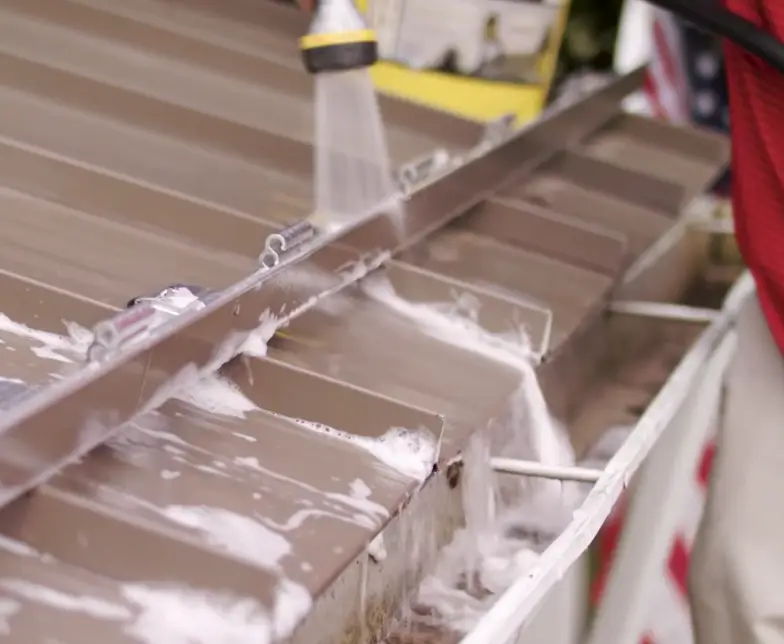
A thorough visit typically includes a full panel inspection, fastener inspection, sealant inspection at every penetration, flashing inspection, drainage and gutter inspection, photo documentation of the visit, a written report, and specific recommendations only if something is actually found, not a manufactured upsell regardless of what’s discovered.
This documentation matters beyond the immediate visit too, since many manufacturer warranties require evidence of regular maintenance to remain valid, meaning a documented maintenance history protects your warranty coverage in addition to catching small issues early.
The Stakes Are Higher for Commercial Properties
For commercial property owners, the same escalation path applies, but the dollar amounts scale with the size of the roof and the potential business disruption involved. A leak affecting inventory, equipment, or tenant space carries costs well beyond the roofing repair itself, lost inventory, equipment damage, tenant relations issues, or business interruption if a leak affects an operational area.
Commercial roofs also typically have more penetrations, rooftop HVAC units, vents, drains, than a residential roof, which means more individual points where a small maintenance issue can develop. This is part of why a scheduled maintenance program, with documented visits at set intervals, tends to make more financial sense for commercial properties than an ad hoc, reactive approach, since the potential downside of a missed issue scales with the property’s size and use.
A Simple Way to Think About Whether Maintenance Is Worth It for You
If you’re weighing whether a maintenance visit is worth scheduling, a few honest questions can help clarify the decision.
How long has it been since your roof was last actually inspected, not just glanced at? If the honest answer is “I’m not sure” or “more than a year,” that alone is a reasonable signal it’s time.
Has your area experienced a significant hailstorm or wind event recently? Even without any visible sign of damage, a post-storm inspection is worth scheduling specifically because storm-related issues aren’t always visible from the ground.
Do you know what your manufacturer warranty requires to stay valid? If you’re not certain, checking your warranty documentation, or asking a roofing professional to help interpret it, is worth doing before assuming your coverage is intact regardless of maintenance history.
Would a moderate, unexpected repair cost, a few thousand dollars, be a real financial strain right now? If so, that’s a strong argument for the relatively small, predictable cost of a maintenance visit as a way to avoid a much larger, unpredictable expense later.
If any of these questions gave you pause, that’s a reasonable signal that scheduling a maintenance visit is worth doing sooner rather than later, not because something is necessarily wrong, but because the cost of checking is so much smaller than the cost of not checking and being wrong about it.
What Happens During a Maintenance Visit If Something Is Found
If a maintenance inspection does identify an issue, the process should be straightforward, a clear explanation of what was found, a written recommendation, and in many cases, the ability to address a minor issue on the spot during the same visit rather than requiring a separate appointment. This is part of why catching things during routine maintenance tends to be both cheaper and more convenient than waiting for a problem to become obvious enough to require an emergency call later.
Frequently Asked Questions
How often does a metal roof actually need maintenance? Twice a year is the standard recommendation, ideally once before hail season and once after, with an additional check after any significant storm.
Is it really worth paying for maintenance if my roof looks fine? Yes, since most of what maintenance is designed to catch isn’t visible from the ground or even from a casual walk of the roof surface. The entire value of maintenance comes from catching things before they become visible problems.
How much does skipping maintenance actually increase long term costs? Based on the escalation path outlined above, a problem caught at stage one might cost a few hundred dollars, while the same underlying issue addressed after significant water damage can cost several thousand dollars or more, a difference driven entirely by how long the original issue went unaddressed.
Does my manufacturer warranty actually require documented maintenance? Many metal roofing manufacturers include maintenance requirements in their warranty terms. It’s worth checking your specific warranty documentation, since skipping maintenance can affect coverage in addition to the direct cost risk covered above.
What’s the difference between a maintenance visit and a repair visit? A maintenance visit is a preventative check looking for early signs of wear across the whole roof. A repair visit addresses a specific, already identified problem. Maintenance is designed to prevent needing a repair visit in the first place, or at minimum to catch what would become a repair issue while it’s still inexpensive to address.
Is maintenance worth it on a newer roof, or only older ones? Worth it on both, though for different reasons. A newer roof benefits from maintenance to preserve warranty coverage and catch any installation related issues early. An older roof benefits from maintenance to catch the cumulative wear that naturally increases with age.
Can I do a basic visual check myself between professional maintenance visits? Checking from inside your attic for daylight, water stains, or musty odors, and keeping gutters clear of debris, are both reasonable things to do yourself between scheduled professional visits. Actually inspecting the roof surface itself for fastener and sealant condition is better left to a professional visit, since many of the relevant signs aren’t easily visible or safely assessable without experience and proper equipment.
Does a documented maintenance history help if I ever sell my home? Yes, generally. A documented maintenance record can reassure a buyer that the roof has been genuinely cared for, which is a real, if sometimes overlooked, point in a home’s favor during a sale.
What happens if I’ve genuinely never had my roof maintained and it’s been many years? An initial, thorough inspection is worth scheduling regardless of how long it’s been, since even a roof with a long gap in maintenance history often has issues that are still addressable at a reasonable cost if caught now, compared to waiting even longer.
The Honest Bottom Line
Metal roofing’s low maintenance reputation is genuinely earned, but “low” isn’t “zero,” and the gap between those two ideas is where the real cost risk lives. A small, inexpensive fix caught during a routine check is fundamentally different math than the same problem discovered after months or years of unaddressed water intrusion.
If your roof hasn’t been checked recently, metal roof maintenance Austin homeowners rely on to catch small issues early starts with a straightforward inspection, not an upsell.
Call (737) 243-8241 to schedule a maintenance inspection.