
You’re standing in your driveway looking up at a small dent or a loose edge on your metal roof, and the hardware store aisle full of caulk tubes and roof sealant products is starting to look pretty tempting. Is this actually a job you can handle yourself, or are you about to make a small problem worse?
The honest answer depends entirely on what’s actually wrong. Some metal roof issues are genuinely reasonable for a homeowner to address. Others look simple but hide a failure point that a surface fix won’t solve. This guide walks through both categories directly, without dismissing your question or pretending every repair requires a professional.
If you’re not sure which category your repair falls into, Pecan Metal Roofs offers free inspections for homeowners across Austin, TX, no obligation, just a straight answer.
The Honest Starting Point, Why This Question Deserves a Real Answer
A lot of contractor content dismisses DIY questions outright, either to protect business or out of genuine concern for safety. Both motivations are understandable, but neither one actually answers the question a homeowner standing in their driveway is asking. Some tasks genuinely are within reach for a reasonably capable homeowner with the right tools and a bit of caution. Others aren’t, and pretending otherwise doesn’t help anyone. Here’s where that line actually sits.
What Generally Works, With the Right Caution
Cleaning Debris and Clearing Gutters
This is squarely within reach for most homeowners. Clearing leaves, branches, and general debris from gutters and roof valleys doesn’t require special skill, just basic ladder safety and, ideally, a helper holding the ladder steady. This task genuinely prevents future problems, since trapped debris holds moisture against panel surfaces and accelerates coating wear.
Touching Up Minor Surface Scratches With Manufacturer-Matched Paint
If a small scratch has exposed bare metal without breaking through to a structural point, a manufacturer-matched touch-up paint, if you can identify the correct color and formulation, can genuinely help slow corrosion at that spot. This requires knowing your panel’s exact color code, which is sometimes documented in your original installation paperwork, and using a product actually formulated for metal roofing rather than a generic exterior paint.
Basic Visual Inspection
Walking your property and looking up at your roof from the ground, or safely checking from inside your attic for daylight, water stains, or musty odors, is something every homeowner can and should do periodically. This isn’t a repair, but it’s the first step that determines whether a repair is even needed, and it costs nothing but a few minutes.
Tightening a Single, Clearly Accessible, Visibly Loose Fastener
If you can safely and stably access a single loose screw near a roof edge, and you have the correct driver bit and a replacement fastener with an intact rubber washer, tightening or replacing that one screw is a reasonable, low risk task. The key qualifiers here matter: safely accessible, a single fastener, and the right replacement part, not a generic screw from a hardware store bin that doesn’t match your panel’s fastener spec.
What Generally Doesn’t Work, Even Though It Looks Simple
Consumer Sealant Products as a Real Fix
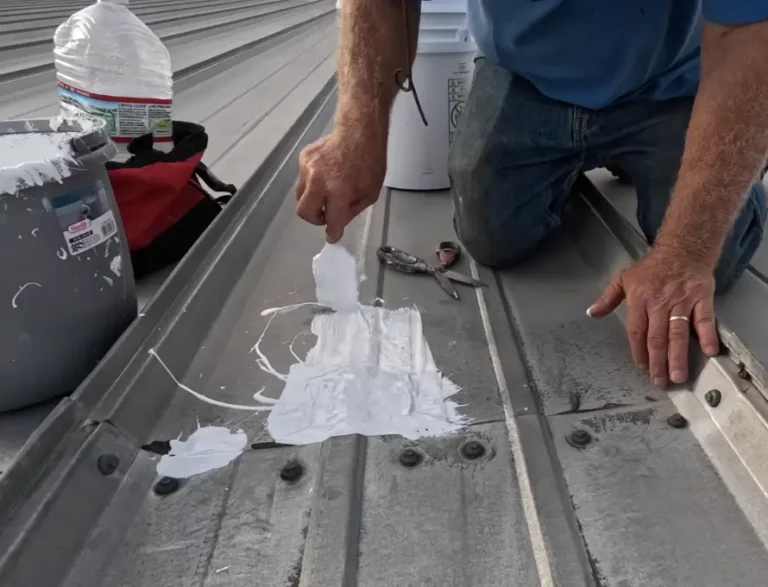
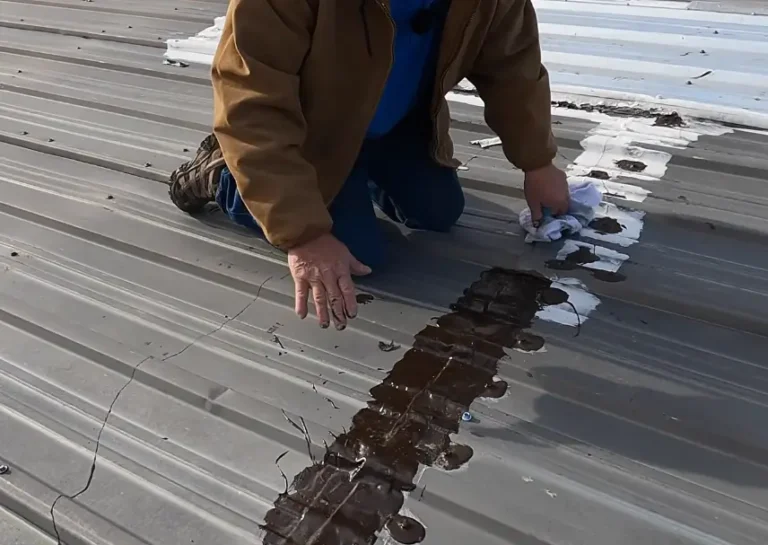
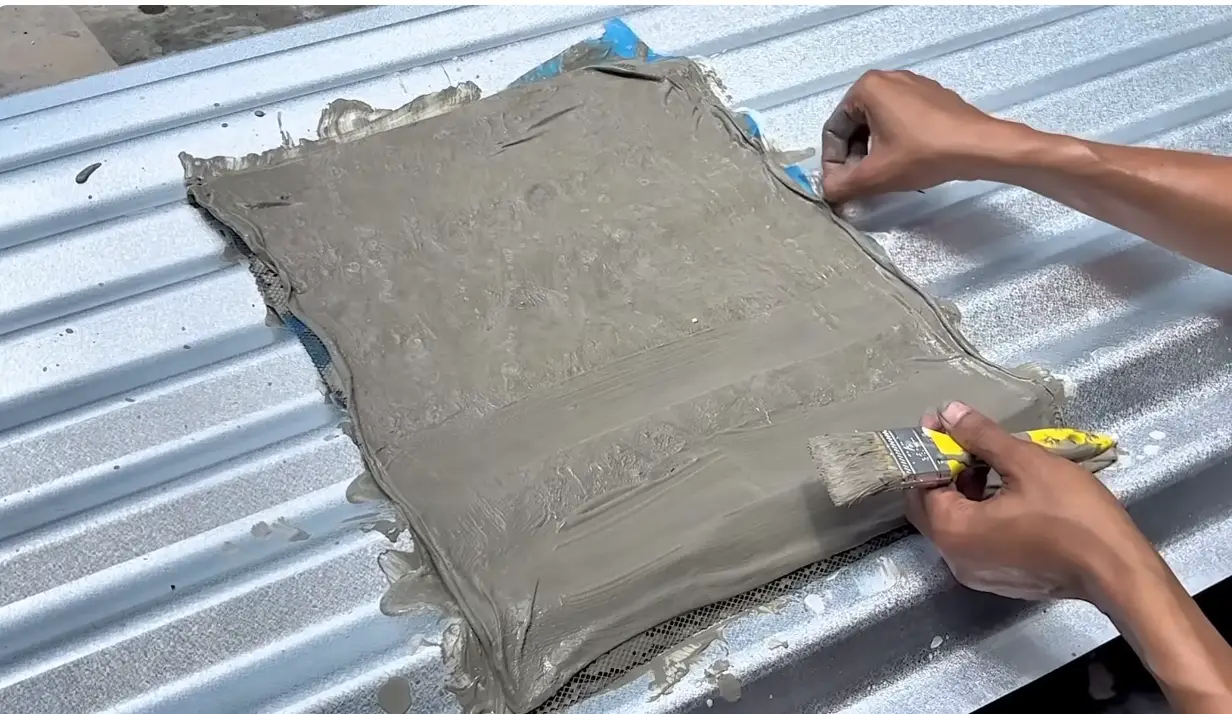
This is the most common DIY approach, and it’s worth being direct about why it usually doesn’t hold up. Products marketed for general household sealing can cover a hole or gap temporarily, but they don’t address the actual failure point underneath, a compromised fastener, a shifted seam, or a structural gap. A covered problem often keeps leaking once the surface patch wears down, shifts, or gets exposed to the next hard rain, sometimes making the eventual professional repair more complicated, since the original failure point now has to be found underneath a layer of dried sealant.
Walking on the Roof Without Proper Safety Equipment or Experience
Metal roofing, especially when wet, dew covered, or on a steep pitch, is genuinely more slippery than many other roofing materials, and a fall from roof height is a serious injury risk regardless of how simple the intended task looks from the ground. This isn’t a legal disclaimer, it’s a real, practical safety concern that applies even to otherwise capable homeowners.
Patching Over a Symptom Without Finding the Actual Cause
A leak that shows up as a ceiling stain in one spot doesn’t necessarily originate directly above that spot, water can travel along framing members or underlayment before dripping down at a specific point. A DIY patch applied directly above the visible stain, without tracing the water’s actual path, frequently misses the real source entirely, leaving the underlying problem to continue.
Replacing a Full Panel
Removing and replacing an entire damaged panel involves understanding how adjacent panels interlock, how flashing integrates at that specific point, and how to fasten the new panel correctly without compromising the surrounding seams. This is a job where a well intentioned DIY attempt can genuinely create a bigger problem than the one it was meant to solve, since an incorrectly installed replacement panel can affect how water sheds across multiple surrounding panels, not just the one that was replaced.
Repairing Flashing Around Chimneys, Vents, or Skylights
Flashing repair requires understanding how water is meant to shed at a transition point between two different roof surfaces or materials, and getting the layering sequence wrong, having a new flashing piece sit under rather than over the adjacent panel edge, for example, can create a leak path that didn’t exist before the repair attempt.
Diagnosing Standing Water or Drainage Issues
If water is pooling on your roof after rain, the underlying cause could be a minor issue or a structural drainage problem, and telling the difference from ground level or even from on the roof without professional experience is genuinely difficult. A DIY attempt to address visible pooling without understanding the actual cause often treats the symptom rather than the source.
Why the “Does Flex Seal Work” Question Comes Up So Often
This specific product, and others like it, get asked about constantly, and it’s worth addressing directly rather than dismissively. These products aren’t fraudulent or useless in every context, they’re designed as general purpose sealants, and they can genuinely provide a temporary, short term barrier in a true emergency situation, active water intrusion during a storm with no other option available. The problem is when a temporary emergency measure gets treated as a permanent fix. If you use a product like this as a genuine stopgap during an active emergency, that’s a reasonable decision. Following up with a proper inspection and real repair afterward is the part that shouldn’t get skipped.
A Simple Framework for Deciding
Here’s a practical way to think through whether a specific task is reasonable to handle yourself.
Is it purely cosmetic, or does it affect water shedding? Cleaning debris and touch-up paint on a scratch are cosmetic-adjacent tasks. Anything involving a seam, a penetration, or standing water affects how the roof actually sheds water, and deserves more caution.
Do you know the actual cause, or only the visible symptom? If you can clearly identify what’s wrong (a specific loose fastener you can see and reach), that’s different from noticing a symptom (a ceiling stain) without knowing where the water is actually entering.
Does the task require accessing a steep, high, or otherwise risky section of roof? If reaching the repair location itself is the hard part, that’s a strong signal to bring in someone with proper safety equipment and experience, regardless of how simple the actual repair task might be.
Would a mistake here make the eventual professional repair more complicated or expensive? A DIY sealant patch over an unaddressed leak source often falls into this category, since it hides the original problem rather than solving it.
If a task fails any of these checks, it’s worth having a professional handle it, not because every homeowner is incapable, but because the actual risk, of a fall, of a worse leak, of a repair that has to be partially undone before it can be done correctly, outweighs the savings of doing it yourself.
What a Professional Repair Actually Adds Beyond the Fix Itself
Beyond the physical repair, a professional visit typically includes a full diagnosis rather than addressing only the symptom you noticed, an inspection of surrounding areas that might show early signs of the same issue, correct fastener and material matching specific to your roof’s actual system, and documentation that can matter later for warranty or insurance purposes. These aren’t reasons to avoid ever doing anything yourself, they’re the actual value being paid for beyond the material cost of the fix itself.
The Real Cost of a Failed DIY Attempt
It’s worth being honest about the financial side of this decision too, not just the safety side. A sealant patch product typically costs a fraction of a professional repair visit, which is exactly why it’s tempting as a first move. The problem is what happens when that patch doesn’t hold.
If a DIY sealant patch fails after a few months, the eventual professional repair often costs more than it would have if addressed correctly the first time, since the technician now has to remove the old patch material, fully assess what’s underneath it, and sometimes deal with additional damage that occurred during the months the underlying issue continued unaddressed, like decking that’s absorbed moisture during that period. In practical terms, a failed DIY attempt doesn’t just delay the real cost, it frequently increases it.
This isn’t true of every DIY attempt, the reasonable tasks covered earlier in this guide, debris clearing, visual inspection, a single accessible fastener, don’t carry this same risk. It’s specifically the sealant-over-symptom pattern and structural repairs attempted without the right knowledge that tend to increase total cost rather than save money.
If You Do Attempt a Reasonable DIY Task, Do This
For the tasks that genuinely are within a homeowner’s reach, a few practices make a real difference in doing them safely and correctly.
Never work on a wet or dew covered roof. Metal roofing becomes significantly more slippery when wet, and morning dew alone is enough to create real risk, even on a roof that looks dry from the ground.
Use a stabilized ladder with a second person present. A huge share of ladder related injuries happen during solo work. Having someone else present, even just to hold the ladder steady and be aware if something goes wrong, is a simple, low cost safety measure.
Take photos before and after any change you make. This creates a record for yourself, useful if you later need to explain to a professional exactly what was done, and useful for your own reference if the issue recurs.
Use roofing-specific fasteners and materials, not generic hardware store equivalents. A fastener that looks similar but lacks the correct rubber washer, coating, or thread pattern for your specific panel system can create a new failure point rather than fixing the original one.
Know when to stop. If a task that looked simple from the ground turns out to be more involved once you’re actually looking at it up close, a partially completed careful stop is always better than pushing through and making a mistake under pressure.
How DIY Repairs Can Complicate an Insurance Claim
If your roof damage might be tied to an insurance claim, whether from a recent storm or damage discovered later, it’s worth knowing that a DIY repair attempt before an adjuster sees the damage can sometimes complicate that claim. An adjuster generally wants to assess the original damage as it occurred, and a DIY patch or repair can make it harder to establish exactly what happened and when. If you suspect a claim might be involved, documenting the damage thoroughly with photos before attempting any repair, even a reasonable one, protects your position, and in cases involving significant storm damage, it’s often worth having a professional inspection before any repair work begins at all, specifically so the documentation supports the claim rather than complicating it.
Frequently Asked Questions
Is it ever okay to use flex seal or a similar product on a metal roof?
As a genuine, temporary emergency measure during active water intrusion, it can serve as a short term stopgap. It shouldn’t be treated as a permanent repair, and the underlying cause should still be professionally addressed afterward.
Can I replace a single loose screw myself?
If it’s safely accessible and you use the correct replacement fastener with an intact rubber washer, this is a reasonable task for many homeowners. If reaching it requires navigating a steep or high section of roof, it’s worth reconsidering.
What tools do I actually need for basic metal roof maintenance tasks like gutter clearing?
A stable ladder, work gloves, and basic hand tools are generally sufficient for debris clearing and visual inspection. Anything involving fasteners or panel work requires roofing-specific tools and materials, not generic hardware store equivalents.
How do I know if a leak I’m seeing is something I can trace myself?
If the stain appears directly below an obvious, visible cause, like a missing fastener you can see from inside the attic, you may be able to identify it. If the source isn’t obvious, water has likely traveled before showing up where you see it, which usually requires a professional inspection to trace accurately.
Will attempting a DIY repair void my roof’s warranty?
This depends on your specific manufacturer’s warranty terms, but some warranties do include language about repairs needing to be performed by a qualified installer to remain valid. It’s worth checking your specific warranty documentation before attempting a repair on a roof still under warranty.
What’s the biggest mistake homeowners make with DIY metal roof repair?
Treating a temporary patch as a permanent solution is the most common pattern. A sealant product applied over a visible symptom often does stop water from showing up in the same spot for a while, which creates a false sense that the problem is solved, when the underlying cause is often still there, sometimes worsening underneath the patch.
Is it cheaper in the long run to always call a professional, even for small issues?
Not necessarily. Genuinely minor, low risk tasks like debris clearing don’t need a professional visit, and treating every small issue as requiring paid intervention isn’t realistic or necessary. The key distinction is matching the task to the framework covered above, not defaulting to either extreme.
How can I tell if a previous owner or a past contractor did a DIY-style patch on my roof?
Signs include mismatched sealant color or texture compared to the surrounding roof, sealant applied over a wider area than the actual damage would suggest, or a patch that looks recently applied without any visible fastener or structural repair underneath it. If you’re unsure what a previous repair actually involved, a professional inspection can usually identify whether it was a genuine fix or a surface level patch.
How do you repair a metal roof?
Most repairs involve resealing a penetration point, replacing a damaged fastener, or swapping a single damaged panel section, depending on the specific cause. A professional inspection first identifies the actual source before any repair begins.
How do you patch a metal roof?
A proper patch matches the existing panel material and finish, then gets sealed with a roofing-grade sealant designed for metal, not a general purpose caulk. Patching without identifying the underlying cause often means the same issue returns later.
Can a metal roof be repaired, or does it need full replacement?
Yes, in most cases. A single damaged panel, a loose fastener, or a failed seal can typically be repaired without replacing the whole roof, as long as the damage is limited and caught before it spreads to the decking underneath.
The Honest Bottom Line
Some metal roof maintenance genuinely belongs in the homeowner’s own hands, debris clearing, visual inspection, and simple, safely accessible fastener tightening among them. Sealant patches, panel replacement, flashing work, and anything requiring you to trace an unclear leak source or access a risky part of the roof generally don’t, not because the tasks are impossible to learn, but because the margin for a costly mistake is real and the safety risk is genuine.
If you’re not sure which category your specific situation falls into, metal roof repair Austin homeowners trust starts with an honest, in-person look, and we’ll tell you plainly if it’s something simple enough to handle yourself.
Call (737) 243-8241 for a free inspection and a written estimate.