If you’re comparing metal roofing against asphalt shingles for your Austin home, you’ve probably already heard the highlight reel. It lasts decades. It handles hail. It reflects heat. What you don’t hear as often is the full picture, including the parts that don’t make it into a sales pitch.
This guide walks through both sides honestly, the real benefits and the real tradeoffs, so you can make a decision based on facts instead of a highlight reel. If after reading this you want a straight answer about your specific roof, Pecan Metal Roofs offers free inspections and honest advice for homeowners across Austin, TX.
Why Homeowners Are Switching to Metal
Central Texas puts real stress on a roof. Hailstorms show up most summers with little warning. Temperatures swing from the high 20s in January to well over 100 degrees by August. Live oak debris and cedar pollen build up year round. Asphalt shingles were never designed with this specific combination of extremes in mind, and a growing number of Austin homeowners have started looking at metal as the more sensible long term choice.
That said, “more sensible” doesn’t mean “right for everyone.” Here’s the full breakdown.
The Pros of Metal Roofing
1. It Lasts Significantly Longer Than Asphalt
This is the single biggest reason homeowners switch. A properly installed standing seam metal roof typically lasts 50 years or more, with some systems reaching 70 years or beyond. A typical asphalt shingle roof in Central Texas lasts 20 to 25 years, often on the shorter end once hail damage is factored in.
Over the time a family owns a home, that difference is significant. One metal roof commonly outlasts two, sometimes three, separate asphalt roof replacements. If you plan to stay in your home for a long time, that math matters.
2. It Handles Hail Far Better Than Shingles
Texas experiences more hailstorms than any other state in the country, averaging around 667 events a year statewide. Austin specifically has logged well over a hundred hail reports within ten miles of the city center since 2004, including hail as large as four inches across in past events.
A hailstorm that strips granules off an asphalt roof and leaves it visibly damaged usually leaves only small, mostly cosmetic dents on a metal roof, particularly on panels rated Class 4 for impact resistance, the highest rating available. Most hail dents on metal are not even visible from the ground.
3. It Reflects Heat Instead of Absorbing It
This is a measured, researched benefit, not marketing language. Research from the Lawrence Berkeley National Laboratory’s Heat Island Group found that a highly reflective roof surface can stay roughly 50 degrees Fahrenheit cooler than a dark, low reflectivity roof under the same summer sun. On a typical Austin afternoon, a dark asphalt roof can exceed 150 degrees, while a reflective metal roof stays significantly cooler.
The Environmental Protection Agency’s cool roofing research found that reflective roofing can reduce cooling energy use by up to 40 percent compared to a standard dark roof. A separate study conducted by Florida Power and Light, the Florida Solar Energy Center, and Habitat for Humanity found that painted metal roofs saved homeowners about 23 percent annually on cooling costs compared to dark traditional shingles.
For a home in Austin, where cooling costs run high for a large part of the year, that’s real, ongoing savings, not a one time benefit.
4. It’s Non-Combustible
Metal roofing is fire resistant by nature. This matters in a state where wildfire risk is a real seasonal concern in parts of the Hill Country, and it’s also one of the reasons some insurance carriers offer premium discounts for metal roof installations.
5. It Requires Less Ongoing Maintenance
Standing seam systems in particular, with concealed fasteners rather than exposed screws, avoid the specific failure mode that drives most maintenance needs on other roofing systems. There’s no granule loss to worry about, no curling shingle edges, and no need for periodic reshingling of damaged sections. A metal roof still benefits from an annual inspection, but the maintenance burden overall is meaningfully lower than asphalt.
6. It’s Genuinely Recyclable
Most steel roofing panels contain a real percentage of recycled content, and at the end of a metal roof’s life, the material itself is fully recyclable rather than heading to a landfill, which is the common fate of old asphalt shingles once they’re torn off. If sustainability factors into your decision at all, this is a real, not just marketed, difference.
7. It Tends to Hold or Increase Resale Value
Metal roofing is increasingly viewed as a premium upgrade in markets like Austin, where hail damage on an aging asphalt roof is a common concern for buyers. A newer metal roof removes that concern entirely for whoever buys the home next, which is part of why it’s often cited as a selling point rather than just a personal preference.
8. It’s Compatible With Solar
Standing seam roofs in particular are well suited to adding solar panels later, since mounting clamps attach directly to the raised seams without requiring new holes to be drilled into the roof. This is a meaningful advantage over other roofing types for homeowners who might want solar down the road but aren’t ready to commit right now.
The Cons of Metal Roofing
A page that only lists benefits isn’t giving you the full picture, and this is where a lot of contractor content stops short. Here’s what’s actually true about the downsides.
1. The Upfront Cost Is Meaningfully Higher
This is the most significant drawback, and it’s worth being specific rather than vague about it. Standing seam metal roofing typically costs about two and a half times what an asphalt shingle roof costs. Exposed fastener panel systems run closer to two times the cost of asphalt.
For a typical Austin home, that can mean a difference of many thousands of dollars upfront. The long term math often favors metal once you account for lifespan and reduced maintenance, but the initial number is real, and it’s worth budgeting for honestly rather than being surprised by it partway through the estimate process.
2. Oil Canning Is a Real, If Cosmetic, Issue
Oil canning is a slight waviness that can appear in a flat panel section, caused by normal thermal expansion as the metal heats and cools. It doesn’t affect how the roof performs and isn’t a structural issue, but it can be visible under certain lighting conditions, particularly on flatter panel profiles and lighter colors. If a perfectly flat, mirror smooth appearance matters a great deal to you, this is worth discussing directly with your installer before choosing a panel profile.
3. Repairs Are Priced Differently Than Shingle Repairs
A damaged asphalt shingle can be swapped out individually at relatively low cost. A damaged metal panel, say from a fallen tree branch, usually requires replacing the entire panel, not just a small patched section. Metal roofs need repair less often overall than asphalt, but when a repair is needed, it tends to cost more per incident than the equivalent shingle fix.
4. Some Insurance Policies Exclude Purely Cosmetic Hail Damage
This is a detail most contractor sites don’t mention, and it’s worth knowing upfront. Many homeowner insurance policies include a cosmetic damage exclusion specifically for metal roofs. That means hail dents that don’t actually cause a leak, purely visual denting, may not be covered by your policy, even if they’re noticeable. It’s worth checking your specific policy language rather than assuming hail cosmetic damage will automatically be paid out.
5. It Requires Specialized Installation Expertise
Metal roofing is a genuinely different trade from asphalt shingle work. Standing seam panels are often custom fabricated on site to a roof’s exact dimensions, and flashing detail around chimneys, vents, and dormers takes different judgment than laying a standard shingle course. A contractor who splits time across multiple roofing materials often doesn’t bring the same depth of expertise to metal specifically that a specialist does. This matters more for metal than for almost any other roofing material, since installation quality has an outsized effect on how the roof performs over its lifetime.
6. Some Manufacturers Require Annual Maintenance to Preserve the Warranty
Depending on the manufacturer, an annual soft wash may be recommended, and in some cases required, to keep the panel finish clean and to satisfy warranty maintenance requirements. Pricing for this service varies depending on roof size and accessibility, so it’s worth asking directly rather than assuming it’s included in your original installation cost.
7. Color Options, While Wide, Aren’t Unlimited
Metal roofing comes in a broad range of colors and finishes, but the exact palette depends on the manufacturer and coating system you choose. If you have a very specific color in mind, it’s worth confirming availability early in the process rather than assuming every shade is achievable.
A Closer Look at Panel Systems, Since “Metal Roofing” Isn’t One Product
Part of what makes metal roofing confusing to compare against asphalt is that “metal roofing” isn’t a single product the way asphalt shingles largely are. The panel system you choose changes the cost, the maintenance profile, and even some of the pros and cons listed above.
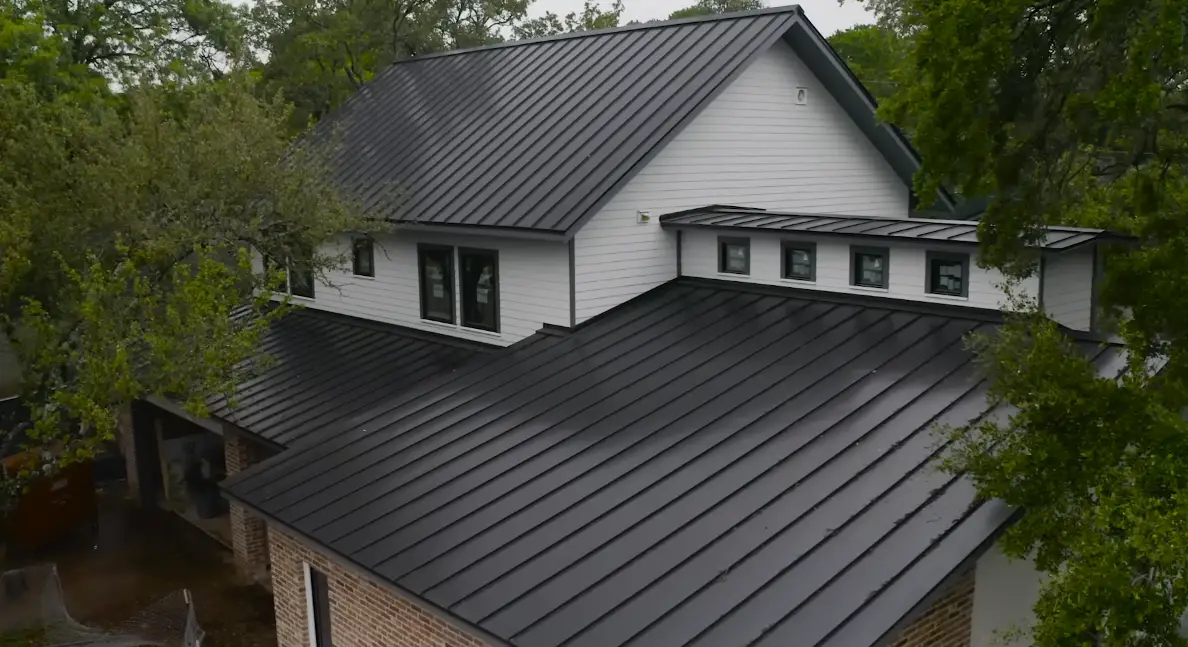
Standing seam uses concealed fasteners hidden inside raised vertical seams, meaning no exposed screws are ever visible or exposed to weather. This is the system most associated with the long lifespan and low maintenance numbers cited throughout this guide, but it’s also the most expensive option due to the labor and fabrication precision required.
Exposed fastener panels, sometimes called corrugated or R-panel systems, cost less upfront and install faster, making them a common choice for garages, workshops, and budget-conscious projects. The tradeoff is that the exposed screws holding the panels down need periodic checking and occasional replacement over the life of the roof, since the rubber washers under each fastener degrade with age and thermal cycling.
Stone coated steel panels combine a steel base with a coated stone granule surface, giving them the durability of metal with an appearance that can pass for traditional shingle or tile roofing from the street. This system is a common choice for homeowners in neighborhoods with strict HOA design guidelines that specify a traditional roofing appearance.
Each of these systems has a different cost, a different maintenance schedule, and in some cases, different pros and cons than the general “metal roofing” summary above. If you’re comparing quotes, make sure you’re comparing the same panel system across each one, since a standing seam quote and an exposed fastener quote for the same roof can differ significantly.
The Gauge Question, Why Panel Thickness Matters
One detail that rarely comes up in general pros and cons discussions, but genuinely affects both cost and performance, is panel gauge, the thickness of the metal itself. Thicker gauge steel, typically 24 gauge, costs more than thinner 26 gauge material, but it holds up better against hail impact and general wear over time.
This is worth understanding before comparing quotes, since a lower bid sometimes reflects a thinner gauge panel rather than a genuinely better price for the same product. Asking directly what gauge is specified in a quote is one of the simplest ways to make sure you’re comparing apples to apples between contractors.
Regional Considerations Specific to Central Texas
A few factors specific to this region affect how metal roofing performs here, beyond the general pros and cons that would apply anywhere.
Limestone and clay soil movement. Central Texas sits on soil that shifts with seasonal moisture changes. Over years, that ground movement can affect how flashing seals against chimneys and walls, which is one of the things worth checking during a routine roof inspection regardless of roofing material.
Wind uplift requirements. Austin’s building code requires roofing materials to meet a minimum wind uplift rating suited to Central Texas storm conditions. This affects how panels are fastened during installation and is a real, code driven consideration, not just a manufacturer specification.
Cedar pollen and live oak debris. Winter cedar pollen and spring live oak debris settle on roofs and in gutters throughout the year across Central Texas. This doesn’t damage metal roofing directly, but it does mean gutters need more frequent clearing than they might in a region with less tree cover, since clogged gutters can push water back under panel edges regardless of roofing material.
Extended summer heat exposure. Austin’s summers run longer and hotter than much of the country, which is exactly why the reflective properties of metal roofing translate into a more noticeable, measurable energy benefit here than they would in a milder climate.
What a Metal Roof Installation Actually Involves
Understanding the installation process itself helps explain both the cost and the importance of hiring a specialist. A typical metal roof installation involves measuring the roof in person rather than relying solely on satellite imagery, checking the decking underneath for rot or damage that needs to be addressed before any panels go on, selecting panel type, gauge, and color based on the home’s style and the owner’s budget, installing with careful attention to flashing at every chimney, vent, and roof edge, since that’s where the overwhelming majority of leaks originate, and finishing with a full site cleanup, including a magnetic sweep for stray fasteners and scrap metal.
Most residential installations take three to seven days depending on roof size and complexity, though larger or more architecturally complex roofs can take longer. Full replacements in Austin also require a building permit through the city’s Development Services Department, which a qualified contractor should handle directly rather than leaving to the homeowner.
When Asphalt Still Makes Sense
In the interest of giving a genuinely balanced picture, it’s worth stating plainly that asphalt shingles remain the right choice in some situations. If you’re planning to sell your home within the next year or two and don’t expect the roof condition to be a major factor in the sale price, the lower upfront cost of asphalt may make more financial sense than investing in a 50 year roofing system you won’t be around to benefit from. If your budget genuinely can’t stretch to cover metal’s higher upfront cost even with financing, a quality asphalt shingle roof is still a reasonable, functional choice, particularly a Class 4 impact rated shingle product, which offers meaningfully better hail resistance than a standard shingle at a smaller price premium than switching materials entirely.
The point of this guide isn’t to argue that metal is right for everyone. It’s to lay out the real tradeoffs so you can make that call based on your own situation.
Metal Roofing vs Asphalt Shingles, Side by Side
| Feature | Metal Roof | Asphalt Shingle Roof |
|---|---|---|
| Typical lifespan | 50 years or more | 20 to 25 years |
| Hail performance | Cosmetic dents, rarely structural failure | Granule loss, cracking, common tear offs |
| Heat reflection | Reflects significant solar heat | Absorbs heat, raises attic temperature |
| Upfront cost | Higher, roughly 2 to 2.5 times asphalt | Lower |
| Ongoing maintenance | Lower, occasional inspection and sealant check | Higher, periodic shingle repair |
| Fire resistance | Non-combustible | Varies by shingle class |
| Repair cost per incident | Often higher, full panel replacement | Often lower, individual shingle replacement |
| Recyclability | Fully recyclable | Typically landfilled |
Who Metal Roofing Actually Makes Sense For
Given both sides honestly, metal roofing tends to make the most financial and practical sense for a specific set of homeowners:
Long term homeowners. If you plan to stay in your home for 15 years or more, the higher upfront cost has time to pay off through avoided replacements and lower maintenance.
Homeowners with repeated hail damage. If your current roof has been damaged or replaced more than once due to hail, metal’s durability directly addresses the recurring cost you’re already absorbing.
Homeowners focused on long term energy costs. If summer cooling bills are a real concern, the reflective properties of metal offer a measurable, ongoing benefit that compounds over years.
Homeowners planning to add solar eventually. Standing seam’s clamp mounting compatibility makes future solar installation simpler and less invasive.
It makes less sense for homeowners planning to sell within the next few years, since the higher upfront cost may not be recouped before a sale, though even then, a newer metal roof can be a genuine selling point depending on the buyer and the local market.
A Few Questions Worth Asking Before You Commit
Does my insurance policy cover cosmetic hail damage on a metal roof, or only damage that causes an active leak? This is worth a direct call to your insurance provider, not an assumption.
Which panel system fits my budget and my home’s style? Standing seam, exposed fastener, and stone coated steel all carry different price points and different aesthetic profiles. Worth exploring options rather than assuming standing seam is the only real choice.
Does my chosen contractor specialize in metal roofing specifically, or is it one material among several they install? Given how much installation quality affects long term performance, this is arguably the most important question on this list.
What does my manufacturer warranty actually require to stay valid? Some warranties have maintenance requirements attached. Better to know upfront than to find out after a claim is denied.
The Honest Bottom Line
Metal roofing is not automatically the right choice for every home or every homeowner, and any content that tells you otherwise is skipping the parts that matter. It costs more upfront. It requires a specialist to install correctly. Some insurance policies treat cosmetic damage differently than they would on asphalt.
At the same time, for homeowners planning to stay put, dealing with Austin’s specific combination of heat and hail, or thinking about long term cost rather than just the number on the initial estimate, metal roofing genuinely delivers on durability, energy performance, and reduced long term maintenance in a way asphalt simply doesn’t.
The right decision depends on your specific home, your specific timeline, and your specific budget, not a generic answer that applies to everyone.
If you want a straight answer about your own roof, Pecan Metal Roofs provides free, no pressure inspections for homeowners across Austin, including Zilker, Hyde Park, Circle C Ranch, Westlake Hills, and the surrounding area. We’ll walk your roof, explain what we find, and tell you honestly whether metal is the right fit, not just sell you the bigger job.
Call (737) 243-8241 for a free inspection and a written estimate.