

Standing Seam Metal Roofing Austin Why It Costs More and What You Get for It
Standing seam costs more than other metal roofing systems, and there are real, specific reasons why. Pecan Metal Roofs installs standing seam metal roofing in Austin, TX and this page explains exactly what the premium buys you, concealed fasteners, custom fabricated panels, and the lowest long term maintenance profile of any metal system available.
Why homeowners choose standing seam?
- Concealed fasteners reduce leak risks
- Custom length panels minimize horizontal seams
- Lower long term maintenance than exposed fastener systems
- Excellent compatibility with future solar installation
- Designed to accommodate thermal expansion in Texas weather
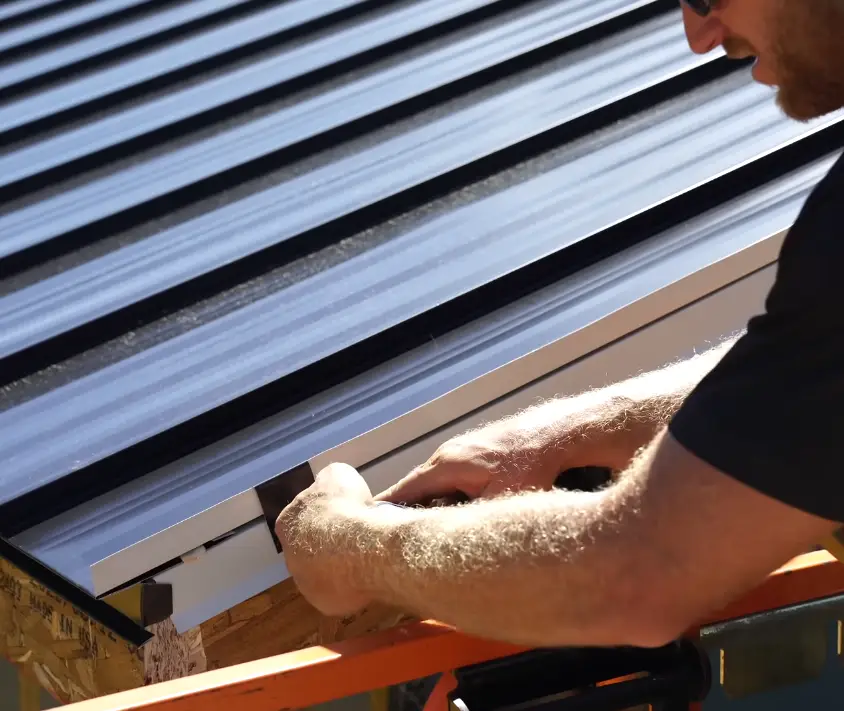
More Than Another Roof Replacement
A standing seam roof isn’t just another roof replacement. For many Austin homeowners, it’s the last roof they expect to buy. Instead of wondering every hail season whether another insurance claim is coming, they want something built for decades instead of years. That’s why standing seam has become the premium choice for homeowners planning to stay in their homes long term.
Standing Seam Metal Roof Contractor in Austin, Texas
How Standing Seam Metal Roofing Assembly Works
Standing seam panels connect at raised vertical seams that sit above the surface of the roof. The fasteners holding the panels to the deck are hidden completely inside those seams, meaning no exposed screws and no holes punched through the roof surface itself.
Why Concealed Fasteners Matter in Austin’s Climate
Metal expands and contracts with every swing in temperature, and Austin swings hard, from the high 20s in January to well over 100 degrees by August. Standing seam panels are designed to float slightly on the roof deck so they can move with that temperature change without stress.
How Standing Seam Panels Are Fabricated and Installed
On-Site Roll Forming vs Factory-Cut Panels
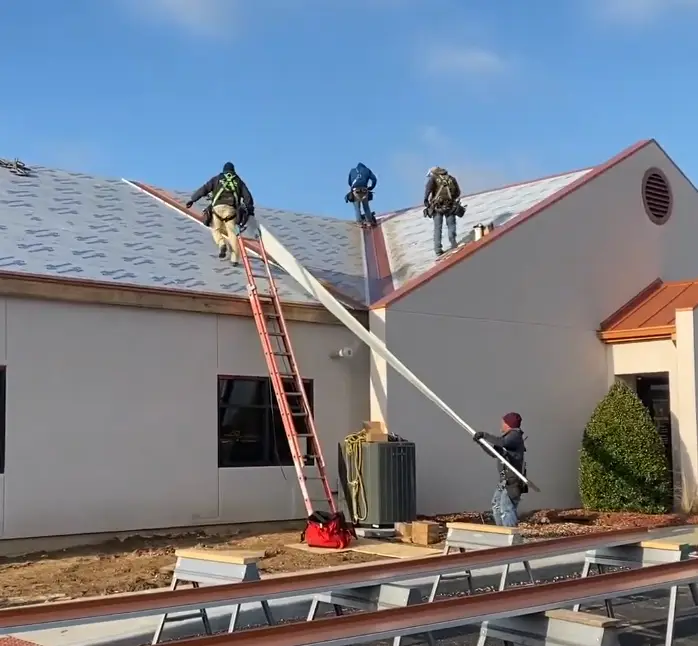
On-site roll forming allows panels to be fabricated to the exact roof length, reducing transportation limitations and minimizing the need for horizontal seams on many projects. Panels are typically formed from coil stock roughly 21 inches wide, with each coil weighing around 25 pounds, and they’re fabricated on the ground, then lifted onto the roof, since the weight of a roll forming machine sitting in one spot could actually damage the roof structure underneath.
Why Custom Standing Seam Metal Roofs Avoid Horizontal Seams
Because panels can be formed to the exact length of a roof plane, standing seam roofs often run in one continuous piece from ridge to eave, with no horizontal seam across the panel’s length.
Standing Seam Options for Austin Homes
Galvalume Coating Explained
Galvalume is a coating that combines zinc with aluminium and a small amount of silicon, acting as a sacrificial layer that protects the steel underneath from corrosion.
Steel, Aluminum, and Copper Standing Seam Panels
Galvalume coated steel is the most common and cost effective choice for Austin homes. Aluminium resists corrosion even better and suits coastal adjacent conditions. Copper is the premium option, distinctive in appearance, at a significantly higher price point.
Snap-Lock, Mechanically Seamed, and Nail Strip Systems
Snap-lock panels use a clip based fastening system that lets panels expand and contract freely with temperature, and they’re generally easier to repair than mechanically seamed systems, which require a specialized tool to crimp the seam closed during installation.
Standing Seam vs Other Metal Roofing Systems
Feature | Standing Seam | Corrugated | Stone Coated |
|---|---|---|---|
Fasteners | Concealed | Exposed | Concealed |
Lowest | Higher | Low | |
Lifespan | 50 to 75 years | 20 to 30 years | 40 to 60 years |
Solar friendly | Excellent | Moderate | Moderate |
Cost | Highest | Lowest | Medium |
Thermal Movement and Why Standing Seam Handles It Better
On an exposed fastener roof, panels are locked in place at each screw point. Years of daily thermal movement gradually work those fasteners loose and degrade the rubber washers beneath them. Standing seam panels aren’t fastened through the surface, so this specific failure mode doesn’t apply.
Solar Panel Compatibility
Standing seam is significantly easier to add solar panels to later, since mounting clamps attach directly to the raised seams with no new holes drilled into the roof.
What Are the Disadvantages of a Standing Seam Roof?
The Real Cost Premium and What Drives It
Standing seam pricing depends on roof complexity, panel gauge, coating, roof pitch, custom fabrication, flashing details, and installation labor. Because every panel is custom measured and installed with concealed fastening clips, labor represents a much larger portion of the project than it does with exposed fastener systems, and that’s the real driver behind the 30 to 50 percent price premium over exposed fastener panels.
Oil Canning and Other Cosmetic Considerations
Oil canning is a slight waviness that can appear in a flat panel section from normal heat expansion. It’s cosmetic, not structural, though it can be more visible on certain colors or in low angle light.
Is Standing Seam Metal Roofing a Good Choice for Austin’s Hot Climate?
Austin puts real stress on a roof. Cedar pollen coats surfaces every winter, live oak debris and sap drop through spring, hail season brings storms with little warning, and UV exposure runs strong for months at a time. Standing seam is built to handle all of it at once without the maintenance burden other systems carry.
Does Standing Seam Metal Roofing Help Reduce Cooling Costs During Austin Summers?
Yes. A reflective standing seam roof keeps attic temperatures noticeably lower than a dark asphalt roof under the same sun.
Hail Performance Compared to Other Systems
Standing seam has no surface penetrations, so even a severe hail event that leaves cosmetic dents typically doesn’t compromise the roof’s waterproofing.
What to Expect?
Inspection | 45 to 60 minutes |
|---|---|
Written estimate | Within 24 hours |
Panel fabrication planning | Included |
Installation | 4 to 7 days |
Final walkthrough | Included |
What You’ll Receive
Every standing seam project includes a roof measurement, panel layout, written estimate, material specifications, permit coordination, manufacturer warranty registration, final walkthrough, and cleanup checklist.
Standing Seam Metal Roof Cost in Austin, TX
What Drives Standing Seam Pricing Specifically
Standing seam pricing depends on roof complexity, panel gauge, coating, roof pitch, custom fabrication, flashing details, and installation labor, with labor making up a notably larger share of the total than it does on simpler panel systems.
Standing Seam Metal Roof Quote in Austin, TX
Since standing seam is fully custom to your roof, an accurate quote comes from an in person measurement, not a generic online calculator.
Keeping a Standing Seam Roof in Good Shape
Even though standing seam requires less maintenance than exposed fastener systems, annual inspections still help identify flashing wear, sealant aging, and storm damage before they become expensive repairs. If your standing seam roof is due for a check, our metal roof maintenance service in Austin covers exactly this.
Areas We Serve in Austin
Zilker, South Congress, Hyde Park, Tarrytown, Circle C Ranch, Westlake Hills, Mueller, East Austin, Burnet Road, South Lamar, and downtown Austin.
Frequently Asked Questions
Get a Standing Seam Metal Roof Quote in Austin, TX
Call Pecan Metal Roofs for a standing seam quote based on your actual roof, with real numbers and an honest answer about whether it’s the right fit for your home.